Underarm Botox Pricing for Hyperhidrosis in Korea
Underarm Botox Pricing for Hyperhidrosis in Korea (Foreigner‑Friendly)
Finding safe, effective underarm Botox for excessive sweating (hyperhidrosis) in Korea can feel confusing for international visitors—especially when pricing structures aren’t clearly explained. Many foreigners prefer clinics that provide upfront costs, English‑friendly consultations, and realistic results without hidden add‑ons or pressure to upsell.
Below is a practical, clinic‑focused underarm Botox price guide designed for foreigners considering this treatment in Korea. This guide emphasizes transparent pricing, proper dosing strategies, and experience with international patients.
What Is Underarm Botox for Hyperhidrosis?
Botulinum toxin injections are used to temporarily block the nerves that stimulate sweat glands in the underarm area, reducing excessive sweating. It is widely used for:
- Reducing underarm sweat and odor
- Improving comfort in daily activities
- Helping with social confidence
- Providing temporary relief from hyperhidrosis
Results typically begin appearing within 3–7 days and can last 4–6 months, depending on individual metabolism and activity level.
How Much Does Underarm Botox Cost in Korea?
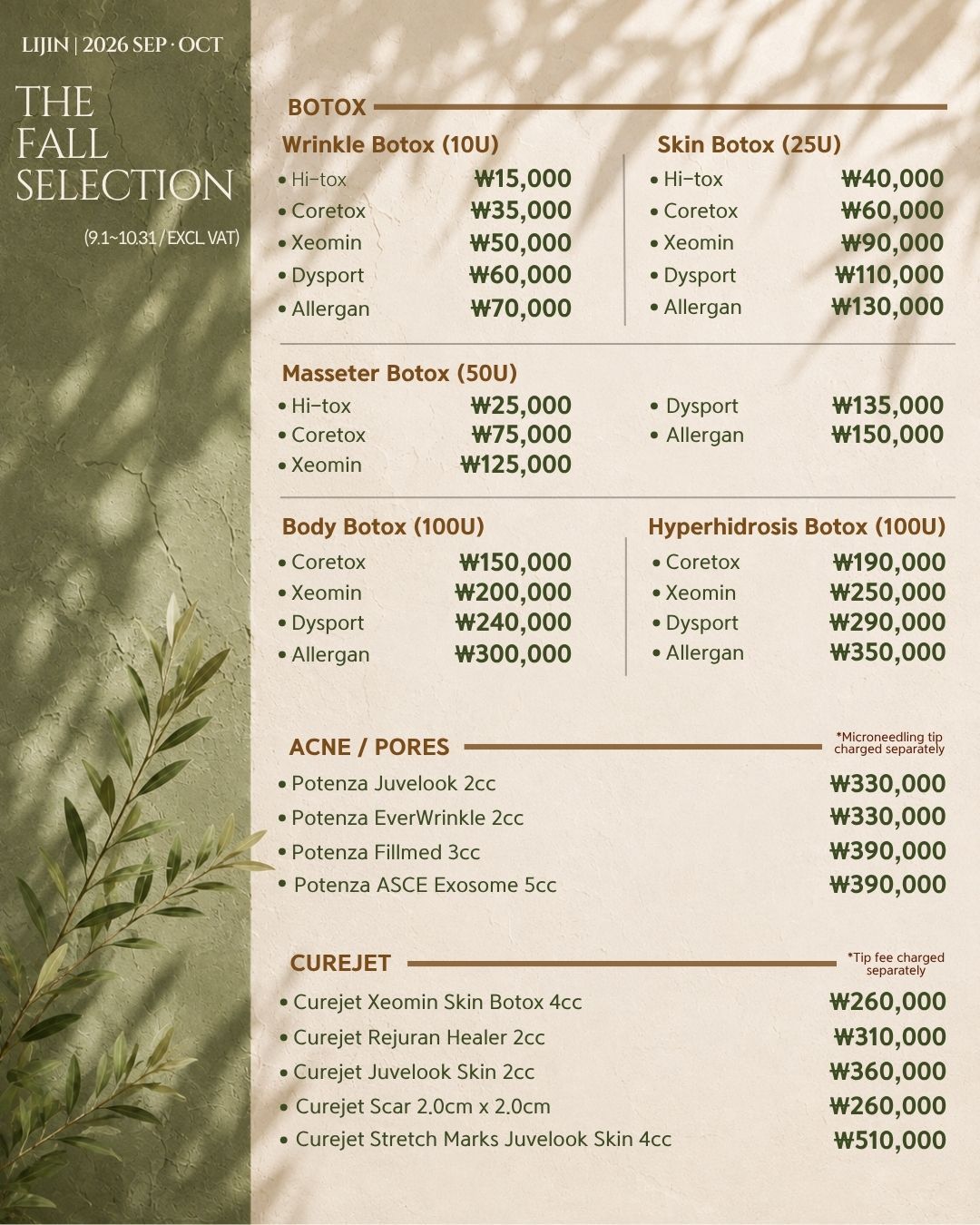
Botox pricing in Korea for hyperhidrosis is usually based on the total number of units used or a flat area price, depending on the clinic. Foreign patients can generally expect the following ranges:
🔹 Typical Underarm Botox Prices (Foreigner Average)
- 60–80 units per armpit (mild to moderate): KRW 400,000 – 700,000
- 80–120 units per armpit (moderate to stronger effect): KRW 700,000 – 1,200,000
- 120–150+ units per armpit (high dose): KRW 1,200,000 – 1,600,000+
💡 Clinics with transparent pricing usually confirm the total units and final cost before treatment, including VAT if applicable.
What Affects Underarm Botox Pricing?
Several factors influence the final price:
- Total units required (based on severity of sweating)
- Brand of botulinum toxin used (Botox®, Dysport, Nabota, etc.)
- Doctor expertise and injection technique
- Number of injection points in each underarm
- English‑friendly consultation availability
- Clinic reputation and location
Foreigner‑friendly clinics typically explain these factors clearly during consultation.
Why Foreigners Prefer Transparent Underarm Botox Clinics
International patients commonly choose clinics that offer:
✔ Clear unit‑based pricing (no hidden surprises)
✔ English‑speaking doctors or coordinators
✔ Honest explanation of achievable sweat reduction
✔ Customized dosing plans based on sweat severity
✔ Safe injection techniques and aftercare guidance
Clinics focused on foreigners prioritize effective results and comfort, not pressure to over‑treat.
Is Cheaper Botox Risky?
Very low‑priced Botox promotions may involve:
- Lower‑grade or unverified toxin products
- Insufficient dosing without transparent explanation
- Inexperienced injectors
- Aggressive upselling during consultation
For safety and predictable results, foreigners are advised to confirm the brand used, total units, and final price in advance.
How to Choose the Right Underarm Botox Clinic in Korea
Before booking, ask these key questions:
- Is the total price confirmed before treatment?
- How many units are included and which brand is used?
- Who performs the injections (doctor vs junior injector)?
- Are expected sweat reduction and timeline explained clearly?
- Are possible side effects and aftercare discussed?
A reputable clinic will focus on effective sweat reduction and patient comfort, not unnecessary upcharges or over‑treatment.
Summary
Korea offers competitive underarm Botox pricing with high standards of care, but the best experience for foreigners comes from clinics that emphasize:
- Transparent unit‑based pricing
- Clear English consultations
- Customized, safety‑first treatment planning
- Trusted Botox brands and skilled injectors
By choosing a clinic that prioritizes clarity and medical standards, international patients can enjoy long‑lasting sweat reduction results without stress or unexpected costs.